
The Proactive Pivot: Transitioning from Reactive to Predictive Care
The Proactive Pivot
Executive Summary
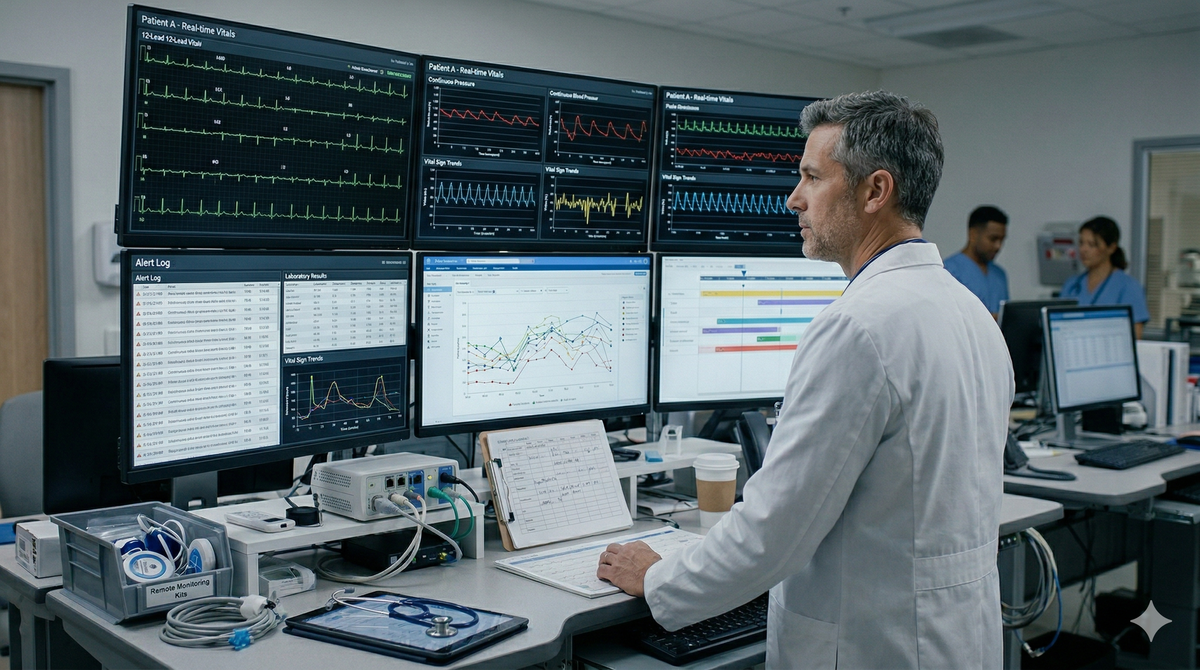
The current medical model for chronic disease management remains stubbornly reactive—treating the "crash" rather than the "drift." The Proactive Pivot represents a systemic shift toward AI-integrated Remote Patient Monitoring (RPM), enabling clinicians to intervene during the pre-symptomatic window. By leveraging high-resolution waveform analysis and machine learning, we can transition from treating episodes to managing trajectories.
Physician's Corner: The Pivot Framework
Reactive Model: Patient presents at ED → Symptom-based diagnosis → Acute intervention → Discharge.
Result: High readmission rates, clinical friction, and patient instability.
Proactive Model: Continuous sensor stream → AI-detected physiological drift → Nurse-led titration/adjustment → Avoidance of crisis.
Result: Reduced hospitalizations, stabilized baselines, and personalized care.
Clinical Evidence & Outcomes
The efficacy of the Proactive Pivot is grounded in quantitative outcomes across several high-burden chronic conditions. The integration of RPM is not merely a convenience but a clinical necessity for reducing mortality and morbidity.
| Clinical Focus | Metric/Indicator | Quantitative Outcome | Clinical Significance |
|---|---|---|---|
| Heart Failure (HF) | Hospitalization Risk Ratio (RR) | RR = 0.80 (p < 0.0001) | Significant reduction in HF-related admissions; Implantables show higher efficacy (RR = 0.72). |
| Essential Tremor | mADL Score Reduction | 6.9 (Active) vs 2.7 (Sham) | Statistically superior tremor reduction via AI-powered stimulation (P < 0.0001). |
| Readmission | ML Model AUC | 0.80 – 0.85 | ML-integrated wearables significantly outperform standard models (AUC 0.60-0.70) for 30-day predictions. |
The Technology Toolkit: Modality Matrix
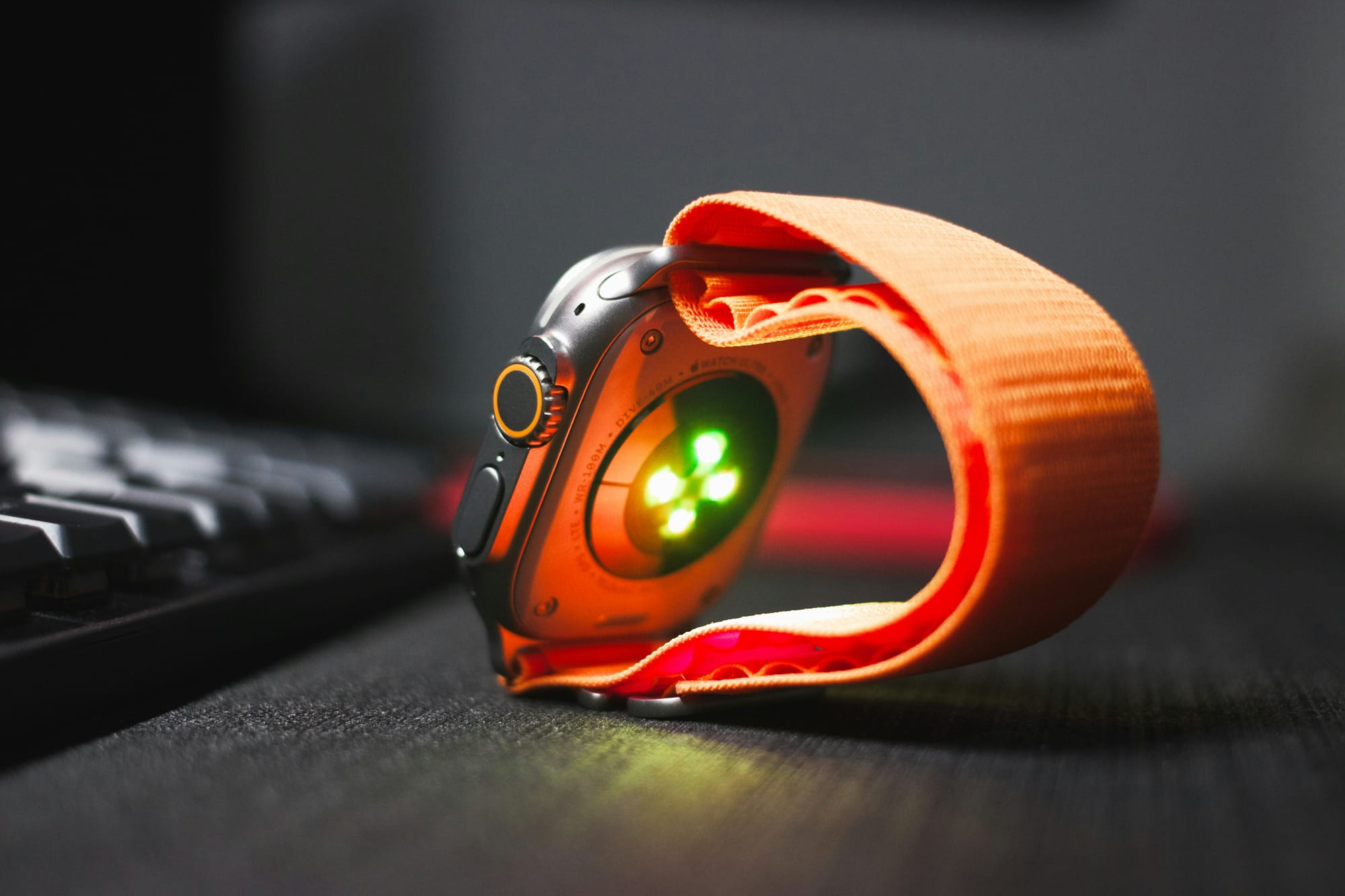
To achieve a proactive pivot, clinicians must deploy a stratified toolkit based on the specific physiological markers required for the target condition.
| Modality | Physiological Markers | Clinical Utility | Key Outcome/Metric |
|---|---|---|---|
| Implantable Sensors (e.g., CardioMEMS) | Pulmonary Artery Pressure | HF Decompensation | Highest efficacy (RR 0.72) |
| High-Res ECG Wearables | HRV (SDNN, LF/HF) | Sepsis Early Warning | High sensitivity (98.7%) |
| Pulse Oximetry (SpO2) | Oxygen Saturation | COPD / Resp Failure | Continuous nocturnal surveillance |
| AI-Cuffless BP | Arterial Pulse Waveform | Hypertension Mgmt | Elimination of "White Coat" effect |
| Neuro-Stim Wearables | Neural Feedback Loops | Essential Tremor | P < 0.0001 (mADL improve) |
Combating Clinical Friction: The Noise Problem
A critical barrier to the Proactive Pivot is Alert Fatigue. Traditional threshold-based alerting creates a "cry wolf" effect that desensitizes clinical staff and endangers patients.
Clinical Warning: The Noise Ratio
In acute settings, up to 94% of alarms are false positives or clinically irrelevant. This desensitization correlates negatively with patient safety (r = -0.381, p = 0.001), and creates a dangerous environment where critical physiological shifts are ignored as background noise.
The Path Forward: Predictive Stewardship
To successfully execute the pivot, healthcare systems must move beyond simple data collection and toward Waveform Intelligence. This involves:
- Nonlinear Variability: Utilizing Heart Rate Variability (HRV) and Respiratory Rate Variability (RRV) to detect sepsis and organ failure before vital signs plummet.
- Pattern Recognition: Replacing static thresholds with AI-derived risk trajectories.
- Structured Escalation: Pairing RPM data with nurse-driven protocols to reduce readmissions by 28% to 40%.
Formal Reference List
- Cureus. The Impact of Remote Patient Monitoring on Clinical Outcomes in Heart Failure Patients: A Meta-Analysis. Cureus. 2025; PMC12538109.
- Scientific Reports. Using remotely monitored patient activity patterns after hospital discharge to predict 30 day hospital readmission: a randomized trial. Sci Rep. 2023; PubMed 37217585.
- Critical Care. Roadmap for the evolution of monitoring: developing and evaluating waveform-based variability-derived artificial intelligence-powered predictive clinical decision support software tools. Crit Care. 2024; PMC11619131.
- Frontiers in Cardiovascular Medicine. The use of heart rate variability, oxygen saturation, and anthropometric data with machine learning to predict... OSA. Front Cardiovasc Med. 2025.
- Healthcare (Basel). The Effect of Alarm Fatigue on the Tendency to Make Medical Errors in Surgical Intensive Care Nurses. Healthcare (Basel). 2025; PMC11941973.
- Agency for Healthcare Research and Quality (AHRQ). Remote Patient Monitoring for Chronic Disease: Evidence Review. AHRQ. 2025.
- Medscape. AI-Powered Wearable Calms Essential Tremor (TRANQUIL Study). Medscape. 2025.
- JMIR mHealth and uHealth. Continuous monitoring of nocturnal vital signs... for the remote diagnosis of COPD. J Med Internet Res Mhealth Uhealth. 2024.
- Springer Nature. Spectral analysis of ECG and SpO2 for machine learning classification of Sleep-Disordered breathing. Springer Nature. 2026.